High-Value Enterprise Scaling
Designing cross-platform grading engines, tag-based logic models, and physical-to-digital printing loops for global customer integrations.
Role: Lead Product Designer (Core Integrations & System Logic)
Key Learnings
- When your unsure, get everyone in the same room sooner rather than later
- We do the hard work (or complex solution) to make the customer or users lives easier
- Building on past mental models is easier than inventing new ones
- Always think about the whole system, even if it is not in scope
- When things get technical, dive deep but remain the non technical perspective
Navigating Conflicting System Environments
Reconciling Fragmented Enterprise Schemas
Designing software integrations at scale means designing for systems that speak completely different technical languages. Within our enterprise partner initiatives, we faced a profound architectural challenge: reconciling Learnosity's highly flexible, multi-question 'Item' architecture with the partner platform's strict single-question data model. The UX challenge required looking past superficial layout layers to define deep functional boundaries, ensuring that data remains perfectly intact and mathematically accurate as it syncs between completely conflicting database schemas.
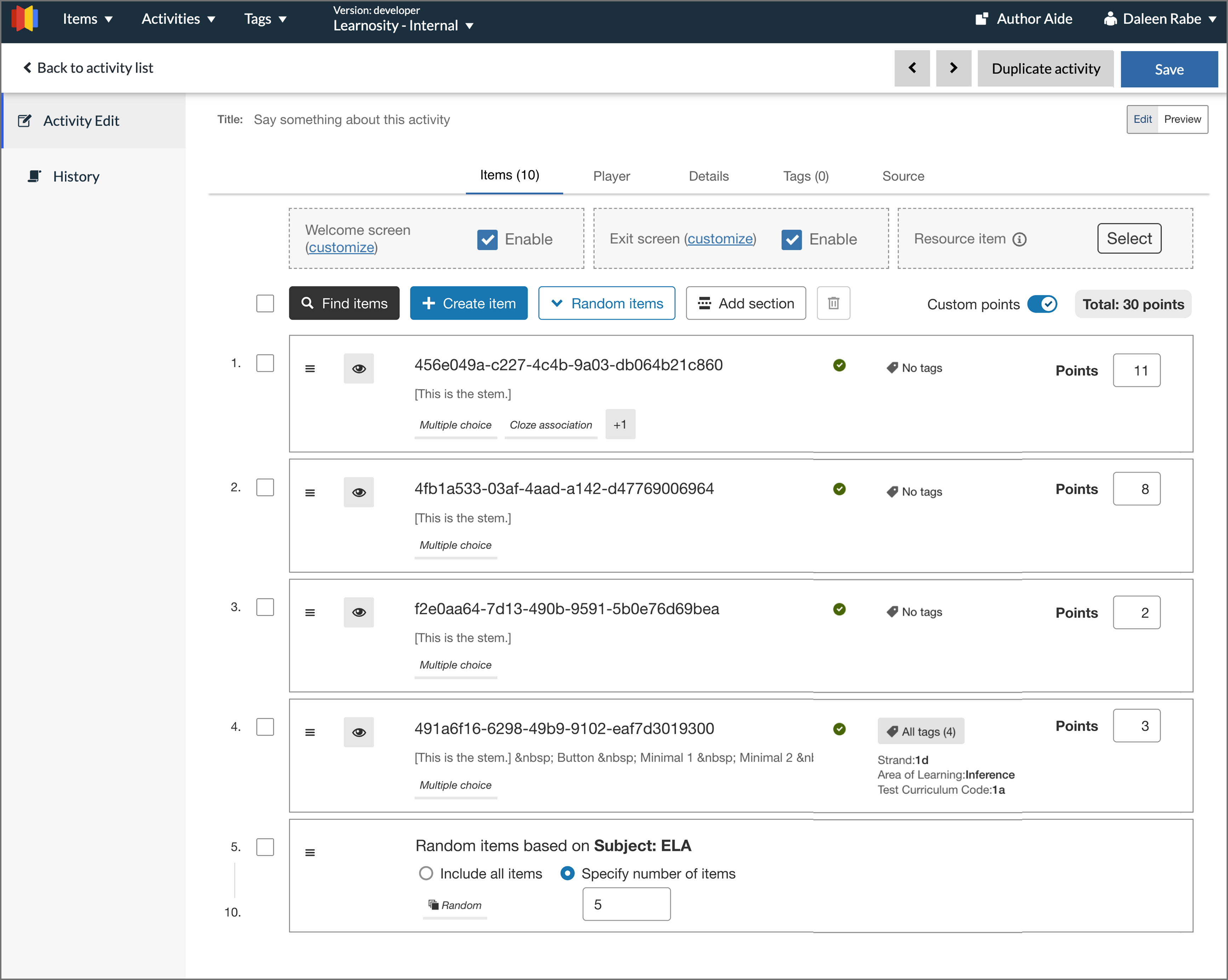
The Activity-Level Grading Engine
Resolving the Schema Nightmare via Isolated Logic
Aligning our internal cross-functional engineering teams with the partner's product stakeholders required intense discovery to isolate the true underlying user needs. To allow instructors to execute points overrides seamlessly without corrupting granular assessment metrics, we engineered a decoupled solution: saving activity-level score modifications independently while mapping them cleanly to the core Activity ID. This architectural separation ensures that top-level grading modifications never corrupt individual question-level points. To enforce user clarity and trust, I introduced contextual system warning states and restricted capabilities to avoid user error.
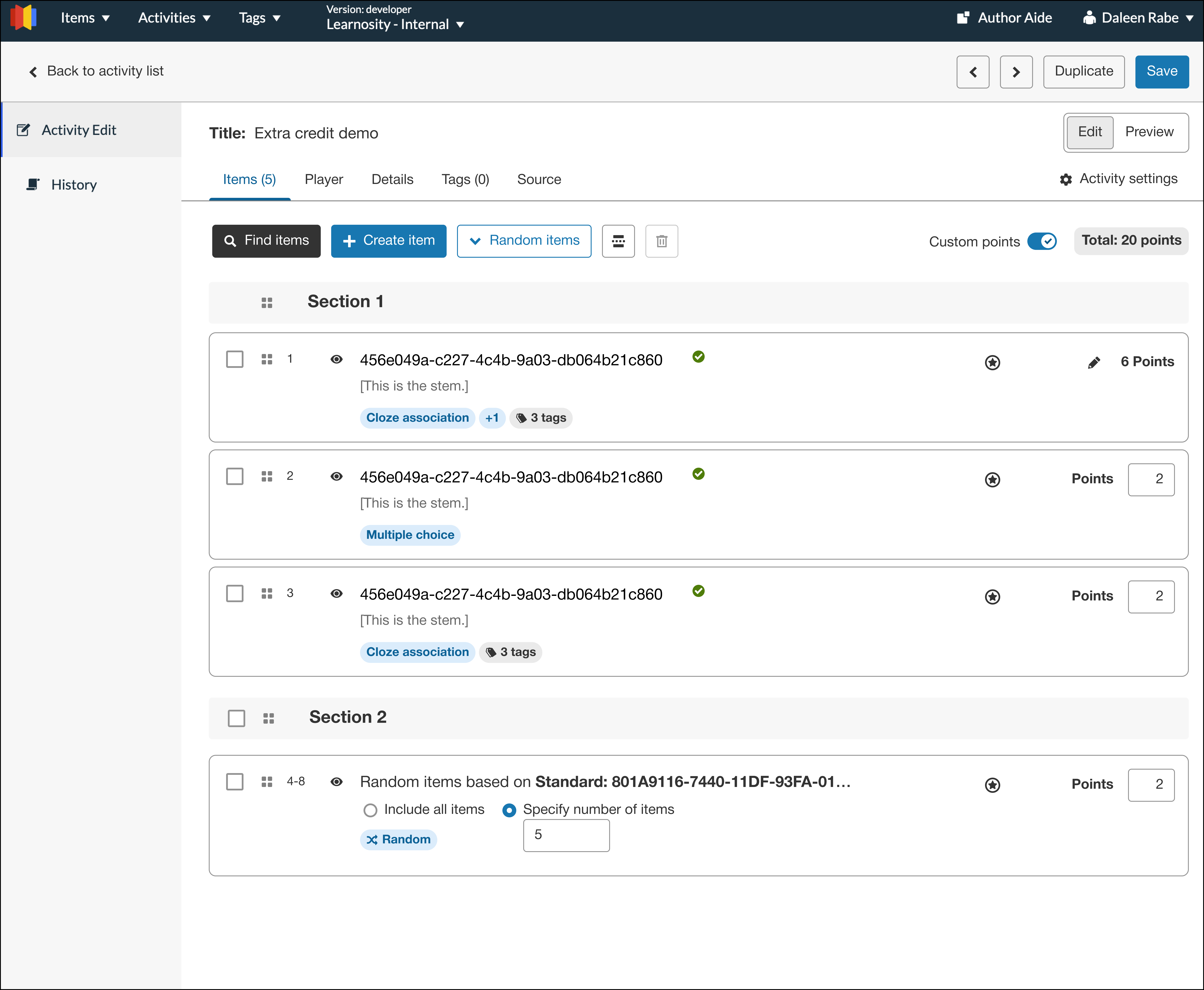
Tag-Based Dynamic Assessment Builders
Complex Mental Models
Introducing dynamic test generation meant introducing a entirely new mental model to our user base. We created a unique assessment row type capable of dynamically pulling in varying item combinations based on localized tagging taxonomies. Because this creates a massive processing load on customer APIs, keeping the UI incredibly intuitive while protecting backend stability was essential. The resulting interface abstracts the underlying technical complexity into two clean selections: choose a tag, then input the specific selection count or choose to pull all items. To prevent server-side scaling issues at run time, I collaborated closely with engineering leads to place advanced operational settings behind initial configuration parameters (init options), safely optimizing performance variables before the UI is rendered.
Alignment & Strategic Cross-Company Leadership
Driving Product Alignment Across Organizational Lines
Designing at this layer of complexity is fundamentally a problem of alignment. Throughout these initiatives, I acted as the primary bridge between our core product squads, engineering leads, and external enterprise partner teams. By mapping out intricate user journeys, structural data boundaries, and edge-case behaviors before a single line of code was drafted, we minimized development rework and established a reliable framework for ongoing multi-tenant product delivery.